- High-pitched squeal: often the pad wear indicator — book a check soon.
- Grinding: likely metal on metal — get it checked right away.
- Clicking or clunking: usually loose hardware or pads shifting.
- Pulsing pedal: uneven rotors.
- Soft or sinking pedal: a hydraulic problem — don’t drive it.
Your brakes are good at telling you when something’s off. The trick is knowing which sounds are a heads-up and which mean stop now. In Phoenix, most miles are stop-and-go on roads like Camelback Road, Indian School Road and 7th Street, so brakes get a real workout. Here’s a plain-English guide.
A high-pitched squeal
What it usually means: many brake pads have a small metal tab, called a wear indicator, that starts to squeal when the pad gets thin. It’s designed to annoy you. Squealing can also come from glazed pads, dust between the pad and rotor, or missing anti-squeal hardware.
How urgent: not an emergency, but don’t ignore it. Book an inspection in the next week or two.
The exception: a light squeal or scraping for the first few stops after the car sits overnight or gets wet — say, from sprinklers — is often just a thin layer of surface rust on the rotors. If it disappears after a few stops, it’s normal.
Grinding
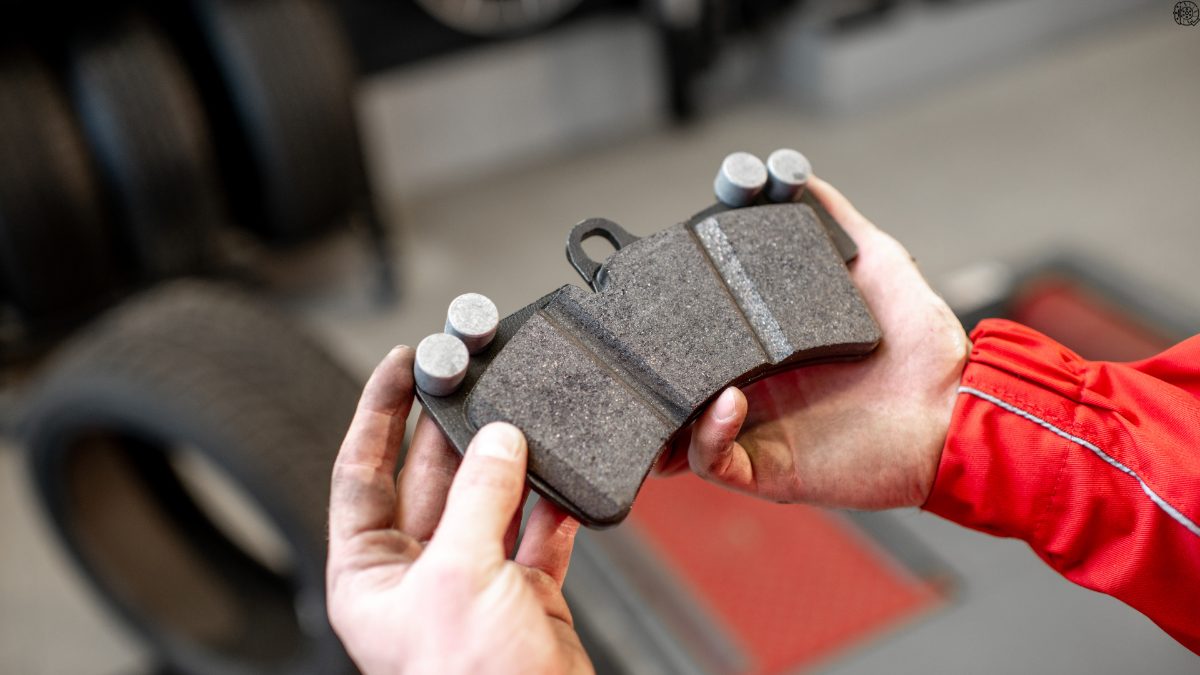
What it usually means: the pad material is worn through and the metal backing plate is rubbing on the rotor. It can also be a rock or debris caught in the brake.
How urgent: high. Metal on metal stops worse and chews up your rotors fast — the longer you drive, the more the repair costs. Get it checked as soon as possible.
Clicking or clunking
What it usually means: pads shifting in their brackets, missing or loose clips, or loose caliper bolts. You’ll often hear it when you first press or release the brake.
How urgent: moderate. Loose parts rarely fix themselves, and a loose caliper is a safety issue.
A pulsing or vibrating pedal
What it usually means: the rotors have uneven thickness (often called “warped”), so the pads grab unevenly as the rotor spins. It’s most noticeable when slowing from highway speed.
How urgent: moderate. It usually means new rotors, and it gets worse over time.
A soft or sinking pedal
What it usually means: air in the lines, a fluid leak, or a failing master cylinder. It’s not a noise, but it’s the most important warning on this list.
How urgent: stop driving. Call us and we’ll come to you instead.
Pulling to one side
If the car drifts left or right when you brake, a caliper may be sticking or a brake hose may be restricted. It also wears pads unevenly. Have it checked soon.
Why Arizona makes some of this more common
Dust and grit from monsoon season and desert roads can get between pads and rotors and cause squeaks. Long, steep descents — like the I-17 grade down from Sunset Point — heat the brakes hard, which can glaze pads over time. Neither is cause for panic, but both are good reasons for a regular brake check.
Not sure what you’re hearing?
Text us a description (or even a short video) at (602) 435-1344. We’ll tell you honestly whether it can wait — and if it can’t, we’ll come to you. Curious what a fix costs? See our Phoenix brake repair price guide.
Hearing something new?
Describe it by text and we’ll give you an honest read — often with same-day service.
Call (602) 435-1344Get a free quote